


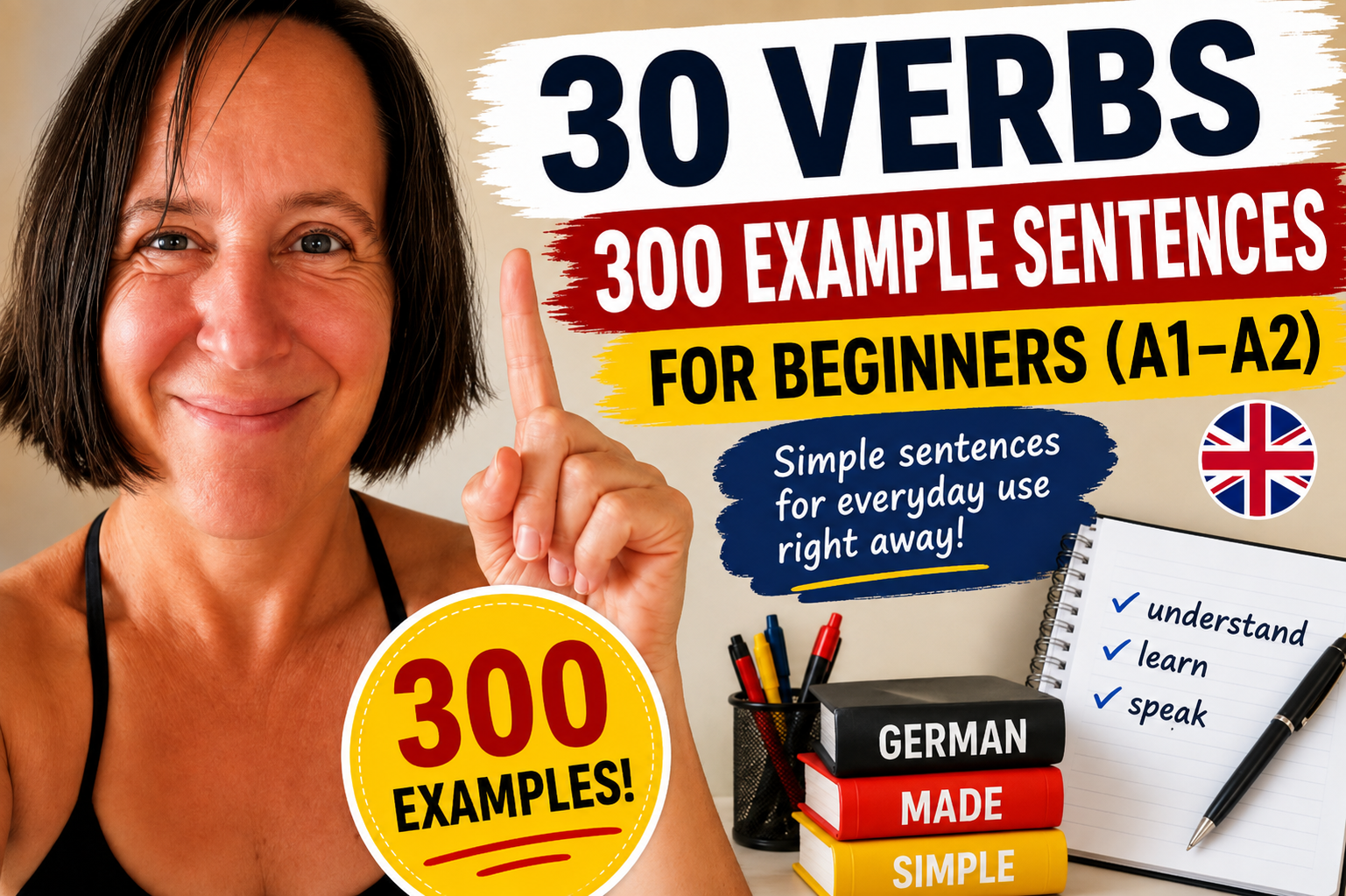
Learn the most important German verbs easily
The first 30 German verbs are among the most important words in the German language. If you know them well, you can already have many conversations and form countless sentences.
In this article, you will find ten simple A1-level example sentences for each of the 30 most common verbs. This way, you learn the verbs not just as isolated vocabulary, but directly in context.
This article is designed for learning German by comparing the German and English versions side by side. In Google Chrome, simply right-click on “Deutsch” underneath the title and select “Open in split view” from the menu. You can then read both language versions next to each other and compare every sentence directly.
You will notice something important when comparing the two versions: one German verb does not always correspond to one English verb. Depending on the context, the same German verb may need to be translated with several different English verbs. That is why the headings below contain the different English translations and functions used in the example sentences, separated by slashes.
If you would like more detailed explanations, take a look at my “1000 Verbs” Mediabook series. The first two verbs have already been published, with conjugations, examples, synonyms, videos, and audio.
be / come
- I am tired.
- I am at home today.
- I am a teacher.
- I am 25 years old.
- I am happy.
- I came here by bus.
- I am finished.
- I am on time.
- It is cold.
- It is Monday.
have / be / auxiliary for past tense
- I have a car.
- I have two brothers.
- I have blue eyes.
- I am hungry.
- I am thirsty.
- I have time today.
- I am afraid.
- I am lucky.
- I have a lot to do.
- I read a book yesterday.
get / become / will
- I am getting tired.
- I am becoming a teacher.
- I will work tomorrow.
- I will learn German.
- I will help you.
- I will go home.
- It is getting dark.
- It is getting cold.
- Spring will be here soon.
- I will achieve my goal.
can / be able to
- I can speak German.
- I can swim well.
- I can come today.
- I can help you.
- I can do that.
- I can wait a long time.
- I can cook well.
- I can open the window.
- I can solve the exercise.
- I can come back tomorrow.
have to / must
- I have to work.
- I have to study.
- I have to get up early.
- I have to go shopping.
- I have to go to work.
- I have a lot to do today.
- I have to be careful.
- I have to wait.
- I have to tidy the room.
- I have to go now.
say / tell / give
- I say my name.
- I say good morning.
- I say thank you.
- I tell the truth.
- I give my opinion.
- I say nothing.
- I say yes.
- I say no.
- I say it slowly.
- I say the sentence again.
speak / talk
- I speak German.
- I speak English.
- I talk to my friend.
- I talk to my teacher.
- I speak slowly.
- I speak clearly.
- I talk on the phone.
- I talk about the weather.
- I speak German every day.
- I like talking to other people.
talk / speak
- I talk a lot.
- I like talking.
- I talk to my family.
- I talk to my friends.
- I talk about my vacation.
- I talk about my work.
- I don’t talk that loudly.
- I talk slowly.
- I talk to my neighbor.
- I talk to my mother every evening.
do / hurt
- I do my best.
- I won’t do anything to you.
- I do a lot today.
- I do everything for my family.
- I do my work.
- I like doing that.
- I’ll do it later.
- I do something good.
- I don’t hurt anyone.
- I won’t do that again.
make / do / exercise / go / take / open / clean
- I make breakfast.
- I make coffee.
- I do my homework.
- I exercise.
- I go for a walk.
- I take lots of photos.
- I open the window.
- I clean today.
- I make a mistake.
- I am going on vacation tomorrow.
come / arrive / be
- I come from Germany.
- I come from Munich.
- I come home.
- I will come back tomorrow.
- I arrive at eight o’clock.
- I come by train.
- I like coming to see you.
- I come alone.
- I am late.
- I’ll be there in a moment.
be supposed to / should
- I am supposed to work today.
- I should study more.
- I am supposed to be on time.
- I am supposed to call the teacher.
- I am supposed to close the window.
- I should drink more water.
- I should go to sleep earlier.
- I am supposed to help my mother.
- I am supposed to come tomorrow.
- I shouldn’t work so much.
want
- I want to learn German.
- I want to travel to Germany.
- I want to go shopping today.
- I want to help you.
- I want to read a book.
- I want to exercise more.
- I want to go to sleep early.
- I want to work tomorrow.
- I want to drink a coffee.
- I want to achieve my goal.
go / walk / be
- I go home.
- I go to work.
- I go shopping.
- I go for a walk.
- I go swimming.
- I go to bed early today.
- I go to the movies with my friends.
- I walk every day.
- I am doing well.
- It is about the German language.
know
- I know the answer.
- I know that.
- I know your name.
- I know where you live.
- I don’t know.
- I know a lot about Germany.
- I know what time it is.
- I know what I want.
- I know how to do that.
- I don’t know yet when I will come.
know / be familiar with
- I know my teacher.
- I know many German words.
- I know this city.
- I know the way.
- I know the restaurant.
- I know this story.
- I know your sister.
- I don’t know the answer.
- I know the problem.
- I have known him for a long time.
see
- I see a car.
- I see the bus.
- I see my friends.
- I see a bird.
- I see the moon.
- I see the television.
- I see the mistake.
- I’ll see you tomorrow.
- I can see well.
- I see it differently.
watch / look at / look out of
- I watch a movie.
- I watch a video.
- I look at the picture.
- I look at the house.
- I watch the news.
- I look at the exercise.
- I look out of the window.
- I look at the book.
- I watch the sunset.
- I look at everything carefully.
leave / let / have something done / take
- I leave the window open.
- I leave the car where it is.
- I let you sleep.
- I take my time.
- I leave my phone at home.
- I leave the dog outside.
- I have my bicycle repaired.
- I leave the door open.
- I leave the light on.
- I let someone help me.
stand / get up / be / say
- I get up early.
- I stand at the bus stop.
- I stand in front of the door.
- I stand in the garden.
- I stand next to my car.
- I like standing by the window.
- I am stuck in traffic.
- It is on the table.
- It says so in the newspaper.
- It says so in the book.
find / think
- I find the key.
- I find my phone.
- I find the book.
- I find the answer.
- I find the way.
- I think the movie is good.
- I find German interesting.
- I think that’s a good idea.
- I can’t find the time.
- I can’t find my glasses.
stay / remain / be
- I am staying at home today.
- I stay calm.
- I stay healthy.
- I am staying for another hour.
- I stay with my family.
- I stay at the hotel.
- I stay here.
- I remain optimistic.
- I am staying until tomorrow.
- I remain your friend.
lie / be / be located
- I am lying in bed.
- I am lying on the sofa.
- I am lying in the sun.
- I am lying on the beach.
- I am lying on the floor.
- The book is lying on the table.
- The key is in the car.
- My phone is in my bag.
- The village is located in the mountains.
- It’s up to you.
think / think about / think of
- I am thinking of you.
- I often think about my family.
- I think about the problem.
- I think positively.
- I think that’s right.
- I think you’re right.
- I like thinking about my vacation.
- I think about tomorrow.
- I think about the future.
- I think about my goal every day.
take / have / accept
- I take the bus.
- I take the train.
- I’ll have a coffee.
- I take a tablet.
- I take my phone with me.
- I take the key.
- I take a book.
- I take my time.
- I take the stairs.
- I gladly accept your help.
look for
- I am looking for my key.
- I am looking for my phone.
- I am looking for an apartment.
- I am looking for work.
- I am looking for a hotel.
- I am looking for a good restaurant.
- I am looking for my glasses.
- I am looking for an answer.
- I am looking for a parking space.
- I am looking for a German course.
can / may / be allowed to
- I can sleep longer today.
- I am allowed to go to the movies.
- I am allowed to use the car.
- I may help you.
- I am allowed to stay at home today.
- I am allowed to park here.
- I may ask this question.
- I can start now.
- I am allowed to open the window.
- I am allowed to take tomorrow off.
be called / be named / mean / say / welcome
- My name is Mona.
- My last name is Müller.
- I warmly welcome you.
- I know what your name is.
- It is called Anna.
- It is called Bahnhofstraße.
- They say the weather will be better tomorrow.
- That means “Haus” in German.
- That means “house” in English.
- What is your name?
write / write down
- I write a letter.
- I write an email.
- I write a message.
- I write a sentence.
- I write a book.
- I write my name.
- I write the answer.
- I write down the homework.
- I write in German every day.
- I write with a pen.
learn / study
- I learn German.
- I study every day.
- I learn new words.
- I study grammar.
- I learn with a book.
- I learn with videos.
- I learn with audio.
- I learn with my teacher.
- I study for the exam.
- I like learning new languages.
Conclusion
Congratulations! You have now seen 300 simple example sentences using the 30 most important German verbs.
If you know these verbs well, you can already understand a large part of everyday German and have many conversations yourself. The best way to practise is to read the sentences aloud several times, listen to them, and then create your own examples.
If you would like to learn German more intensively, take a look at my online course “Relaxed to A1.”
The course is a multimedia language-learning novel about saving the world. You learn German step by step through an exciting story with texts, videos, audio, and lots of images. Each section includes vocabulary lists, exercises, and additional Mediabooks from twelve different series that help you practise vocabulary, grammar, pronunciation, and much more.
This way, you don’t learn German through rules alone. You experience the language through an exciting story and a wide variety of media.
- C1 English Test: Am I Ready for the C1 Exam?

- Local Two-Way Prepositions – Describing Direction and Location or Position

- The 30 Most Important German Verbs – 300 Simple Example Sentences for Beginners (A1–A2)

- Relaxed to A1 – a Learning Novel Where Saving the World Becomes a Language Course

- Learning Languages with Apps – Useful or a Waste of Time?

Leave a Reply