
'/%3E%3C/svg%3E)

'/%3E%3Cpath%20fill='%23b2b2b2'%20d='M241%20382q0%2016%2017%2026%2017%2011%2042%2011t42-11q16-11%2017-26V269H241'/%3E%3Cpath%20fill='%239f7e00'%20d='M241%20379q0%2014%208%2023%209%209%2021%209%2014%200%2021-9%209-9%209-23V269h-59'/%3E%3Cpath%20d='M241%20339v-70h59v110q0%2014-9%2023l-6%205v-68h-15v72q-8%200-14-4v-68zm59%2040c0%2022%2015%2032%2029%2032%2021%200%2030-18%2030-32v-40h-59'/%3E%3Cpath%20fill='%239f7e00'%20d='M266%20277v5h2v12h-3v-5h2v-5h-9v5h2v5h-4v9h3v18h-5v10h34v-10h-5v-18h3v-9h-4v-5h2v-5h-9v5h2v5h-3v-12h2v-5zm42%20101q0%2010%206%2017%206%206%2015%207%2010-1%2016-7%206-7%206-17v-29h-43'/%3E%3Ccircle%20fill='%230044ad'%20cx='329.5'%20cy='372'%20r='6'/%3E%3Cellipse%20fill='%230044ad'%20cx='300'%20cy='340'%20rx='16'%20ry='21'/%3E%3C/svg%3E)


In this article, you will learn how to use local two-way prepositions in German. You will learn the difference between a direction or movement with the accusative and a location or position with the dative, and you will practise using them with many examples.
This is an article for learning German. If you teach German as a foreign language, you can use this article as a complete lesson on the respective topic. If your students speak English, French, Spanish, Italian or Russian, you can right-click on the student’s respective native language under the title and select “Open in split view” in Google Chrome. This allows you to open the German version and the version in the student’s native language directly next to each other.
Contents of the lesson:
- How are you? – informal / formal
- Lesson objectives
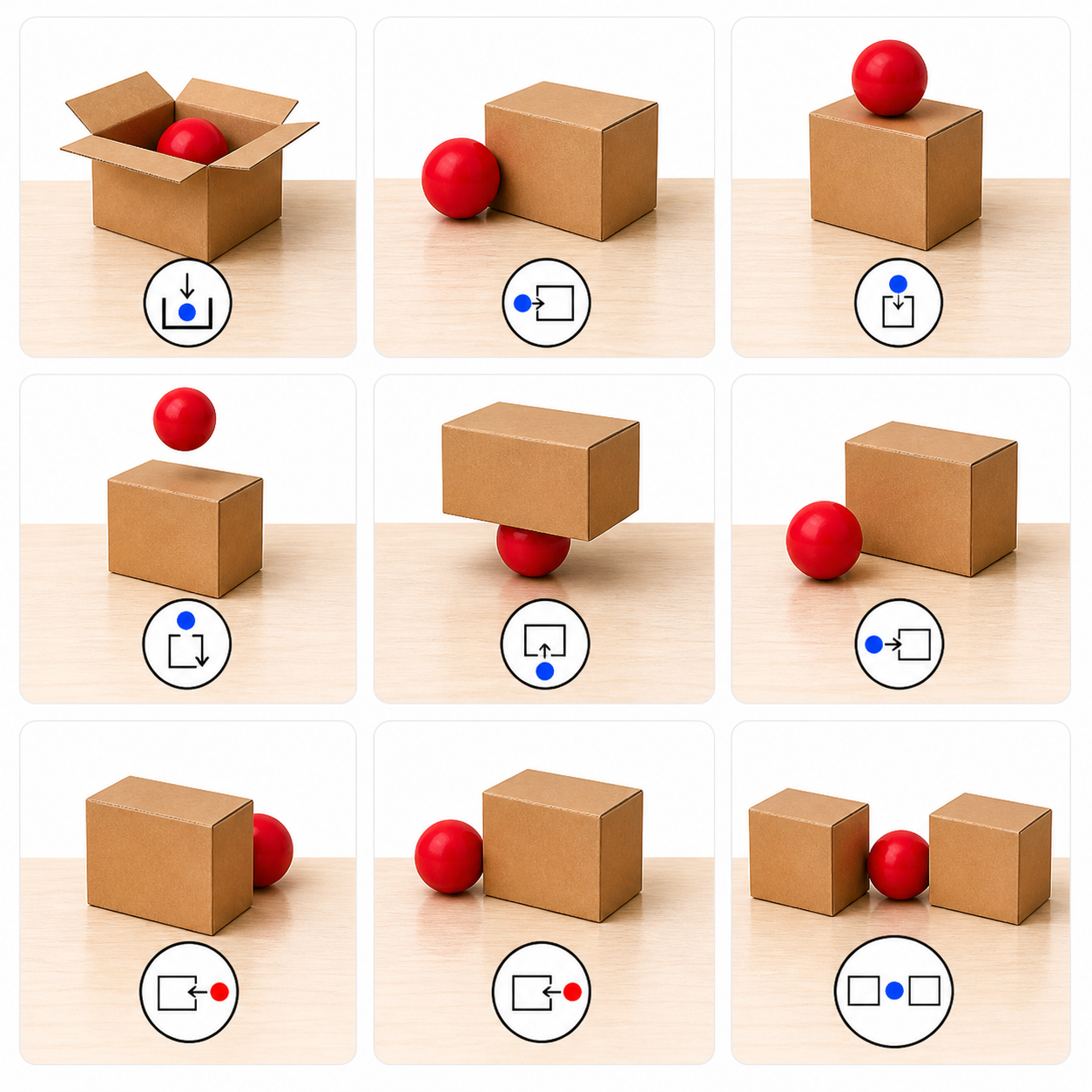
- Local two-way prepositions – direction and location
- Review – personal pronouns
- Review – definite articles
- Review – conjugation of verbs in the present tense
- Direction with the accusative
- Location with the dative
- Exception: in and an before relative clauses
- Colloquial contractions
- Exercises: example sentences
How are you? – informal / formal
Teacher – Student → formal “you” (positive or neutral)
1
Teacher: Good morning! How are you today?
Student: I’m fine, thank you. And you?
Teacher: I’m fine too, thank you.
2
Teacher: Hello! How are you?
Student: Thank you, I’m very well. And you?
Teacher: Very well, thank you.
3
Teacher: Good afternoon! How are you today?
Student: I’m great, really well, thank you. And you?
Teacher: Actually, I’m doing well, thank you.
4
Teacher: Hello! How are you?
Student: Thank you, I’m doing so-so. And you?
Teacher: I’m doing quite well, thank you.
5
Teacher: Good morning! How are you today?
Student: I’m doing relatively well, thank you. And you?
Teacher: Thank you, I’m doing pretty well too.
Student – Student (positive or neutral)
6
A: Hello! How are you?
B: I’m fine, thank you. And you?
A: I’m fine too, thank you.
7
A: Hello! How are you?
B: I’m fine, thank you. And you?
A: I’m fine too, thank you.
8
A: Good morning! How are you?
B: I’m really well, thank you. And you?
A: Great, thanks!
9
A: Hi! How are you?
B: I’m very well, thank you. And you?
A: Me too, thanks.
10
A: Hello! How are you today?
B: I’m fine, thank you. And you?
A: Fine too, thanks.
Teacher – Student (negative)
1
Teacher: Good morning! How are you today?
Student: Not so well. I have a stomach ache.
Teacher: I’m sorry to hear that. Get well soon.
2
Teacher: Hello! How are you?
Student: I’m not doing so well. I’m very tired.
Teacher: I’m sorry to hear that. Get some good rest later.
3
Teacher: Good afternoon! How are you today?
Student: Not so well. I have a headache.
Teacher: I’m sorry to hear that. I hope you feel better soon.
Student – Student (negative)
4
A: Hello! How are you?
B: Not so well. My dog is ill.
A: I’m sorry to hear that. I hope your dog gets well quickly.
5
A: Good morning! How are you?
B: Not particularly well. My friend is in hospital.
A: I’m sorry to hear that. I hope he feels better soon.
6
A: Hi! How are you today?
B: Not too well. I have a headache and I’m tired.
A: I’m sorry to hear that. Get some good rest later.
Lesson objectives
We will learn the local two-way prepositions:
- which ones?
- Direction: accusative
- Location: dative
We will review the personal pronouns.
We will review the articles and their declension.
We will review the verbs to lay, to set, to put and to hang to express movement.
We will review the verbs to lie, to sit, to stand, to be (and to hang) to describe a location or position.
We will practise the local two-way prepositions in context.
Local two-way prepositions – direction and location
in, at, on, above, under, in front of, behind, next to, between


Where to or where?
Where to? → Accusative (movement)
to lay
to put
to set
to hang
👉 + accusative: the
Where? → Dative (location)
to be
to stand
to lie
to sit
👉 + dative: the
Review: Personal pronouns – singular
| Nominative | Accusative | Dative |
|---|---|---|
| I | me | me |
| you | you | you |
| he | him | him |
| she | her | her |
| it | it | it |
Personal pronouns – plural
| Nominative | Accusative | Dative |
|---|---|---|
| we | us | us |
| you | you | you |
| they | them | them |
| you (formal) | you | you |
Reviewing the articles – singular
| Case | masculine | feminine | neuter |
|---|---|---|---|
| Nominative | the | the | the |
| Accusative | the | the | the |
| Dative | the | the | the |
Reviewing the articles – plural
| Case | all genders |
|---|---|
| Nominative | the |
| Accusative | the |
| Dative | the |
Reviewing the conjugation of to lay, to put, to set and to hang
to lay – Where to? – accusative
| Person | to lay |
|---|---|
| I | lay |
| you | lay |
| he/she/it | lays |
| we | lay |
| you | lay |
| they | lay |
| you (formal) | lay |
to put – Where to? – accusative
| Person | to put |
|---|---|
| I | put |
| you | put |
| he/she/it | puts |
| we | put |
| you | put |
| they | put |
| you (formal) | put |
to place – Where to? – accusative
| Person | to place |
|---|---|
| I | place |
| you | place |
| he/she/it | places |
| we | place |
| you | place |
| they | place |
| you (formal) | place |
to hang – Where to? – accusative
| Person | to hang |
|---|---|
| I | hang |
| you | hang |
| he/she/it | hangs |
| we | hang |
| you | hang |
| they | hang |
| you (formal) | hang |
Reviewing the conjugation of to lie, to sit, to stand, to be and to hang
to lie – Where? – dative
| Person | to lie |
|---|---|
| I | lie |
| you | lie |
| he/she/it | lies |
| we | lie |
| you | lie |
| they | lie |
| you (formal) | lie |
to stand – Where? – dative
| Person | to stand |
|---|---|
| I | stand |
| you | stand |
| he/she/it | stands |
| we | stand |
| you | stand |
| they | stand |
| you (formal) | stand |
to sit – Where? – dative
| Person | to sit |
|---|---|
| I | sit |
| you | sit |
| he/she/it | sits |
| we | sit |
| you | sit |
| they | sit |
| you (formal) | sit |
to stand – Where? – dative
| Person | to stand |
|---|---|
| I | stand |
| you | stand |
| he/she/it | stands |
| we | stand |
| you | stand |
| they | stand |
| you (formal) | stand |
to be – Where? – dative
| Person | to be |
|---|---|
| I | am |
| you | are |
| he/she/it | is |
| we | are |
| you | are |
| they | are |
| you (formal) | are |
➡️ Direction: with the accusative – where to?
| Preposition | masculine | feminine | neuter |
|---|---|---|---|
| in | into the | into the | into the |
| at | to the | to the | to the |
| on | onto the | onto the | onto the |
| above | above the | above the | above the |
| under | under the | under the | under the |
| in front of | in front of the | in front of the | in front of the |
| behind | behind the | behind the | behind the |
| next to | next to the | next to the | next to the |
| between | between the | between the | between the |
📍 Location: with the dative – where?
| Preposition | masculine | feminine | neuter |
|---|---|---|---|
| in | in the | in the | in the |
| at | at the | at the | at the |
| on | on the | on the | on the |
| above | above the | above the | above the |
| under | under the | under the | under the |
| in front of | in front of the | in front of the | in front of the |
| behind | behind the | behind the | behind the |
| next to | next to the | next to the | next to the |
| between | between the | between the | between the |
Exception: into / to, in / at
📍 Accusative (WHERE TO?) with a relative clause
I put the book into the shelf/cabinet that is in the living room.
I put the book by the window that is in the classroom.
📍 Dative (WHERE?) with a relative clause
The book is lying in the shelf/cabinet that is in the living room.
I am sitting by the window that is in the classroom.
💡 Explanation
👉 into / to = Where to? (movement)
👉 in / at = Where? (location)
👉 Relative clause: “that is in the living room” = additional description
Colloquial contractions
👉 (spoken language only)
onto the
over the
under the
in front of the
behind the
above the
under the
in front of the
behind the
📌Exercises
1.)
👉 Try to describe the picture.
2.)
First read the written form of an example aloud.
👉 Then say the spoken form, if possible.
The solution is always shown below the picture.

Please scroll down only after you have tried to say the answer.
- What is the son? (Is the son a schoolchild?)
- How old is the son? (Is the son 6 years old?)
1 and 2

- 👶 The son is a baby.
- He is six months old.
3
- What is the daughter? Is she a baby? No, …

- 👧 The daughter is a toddler.
4
- How old is the daughter? Is she six months old? No, …

- She is two years old.
5
- What is the mother doing?

- ➡️ The mother puts her son into bed.
6

- 📍 The son is lying in bed.
7

- ➡️ The mother puts her son on the chair / high chair.
8

- 📍 The son is sitting on the chair / high chair.
9

- ➡️ The father puts his daughter on the chair.
10

- 📍 The daughter is sitting on the chair.
11

- ➡️ The father puts his daughter down on the floor so that she is standing.
12

- 📍 The daughter is standing on the floor.
13

- ➡️ The father lays his daughter on the sofa.
14

- 📍 The daughter is lying on the sofa.
15

- ➡️ The mother lays her son on the table / changing table.
16

- 📍 The son is lying on the changing table.
17

- ➡️ The father places his daughter at the table.
18

- 📍 The daughter is standing at the table.
19

- ➡️ The mother places her son in front of the sofa.
20

- 📍 The son is standing in front of the sofa.
21

- ➡️ The father puts the book behind the teddy bear.
22

- 📍 The book is standing behind the teddy bear.
23

- ➡️ The mother puts her son between the chairs.
24

- 📍 The son is sitting between the chairs.
25

- ➡️ The mother puts the vase into the cardboard box.
26

- 📍 The vase is lying in the cardboard box.
27

- ➡️ The father puts the vase on the table.
28

- 📍 The vase is standing on the table.
29

- ➡️ The mother puts the book into the bookcase.
30

- 📍 The book is standing in the bookcase.
31

- ➡️ The father puts the book under the table.
32

- 📍 The book is lying under the table.
33

- ➡️ The mother hangs the lamp above the table.
34

- 📍 The lamp is hanging above the table.
35

- ➡️ The mother puts the bag on the floor.
36

- 📍 The bag is standing on the floor.
37

- ➡️ The father puts the sports bag next to the car.
38

- 📍 The sports bag is standing next to the car.
To read the article in one of the other languages as well, right-click the link to the desired language under the title of the article and open the article in a new tab.
If you want to read the article in two languages side by side, right-click the tab in the background and select “Create new split view”.
If you would like to read articles like this more often, subscribe to my blog.
- Protected: 001 Questions about “001 The Sparrow and the Hedgehog in April Weather” – Practise Questions and Answers about the Weather

- Why You Should Be Afraid of “Toxic Foods” – and Why Fear Alone Isn’t Enough

- Protected: 003 of 144 The Sparrow and the Fox Talk about Their Families and Origins While Bowling

- Protected: Room Tour VW Passat – Life in the Car 2023

- Dreamy Tiny House Diary – May 2026


Leave a Reply