
Tag: German A1
-

First German Lesson for English-Speaking Learners
Your first German lesson for English-speaking beginners: learn familiar German words, the articles der, die, das, important basic verbs and simple everyday sentences. With German and English side by side, you can understand and practise your first German conversations step by step.
-

Protected: 001 of 144 The Sparrow and the Hedgehog Meet in April Weather
There is no excerpt because this is a protected post.
-
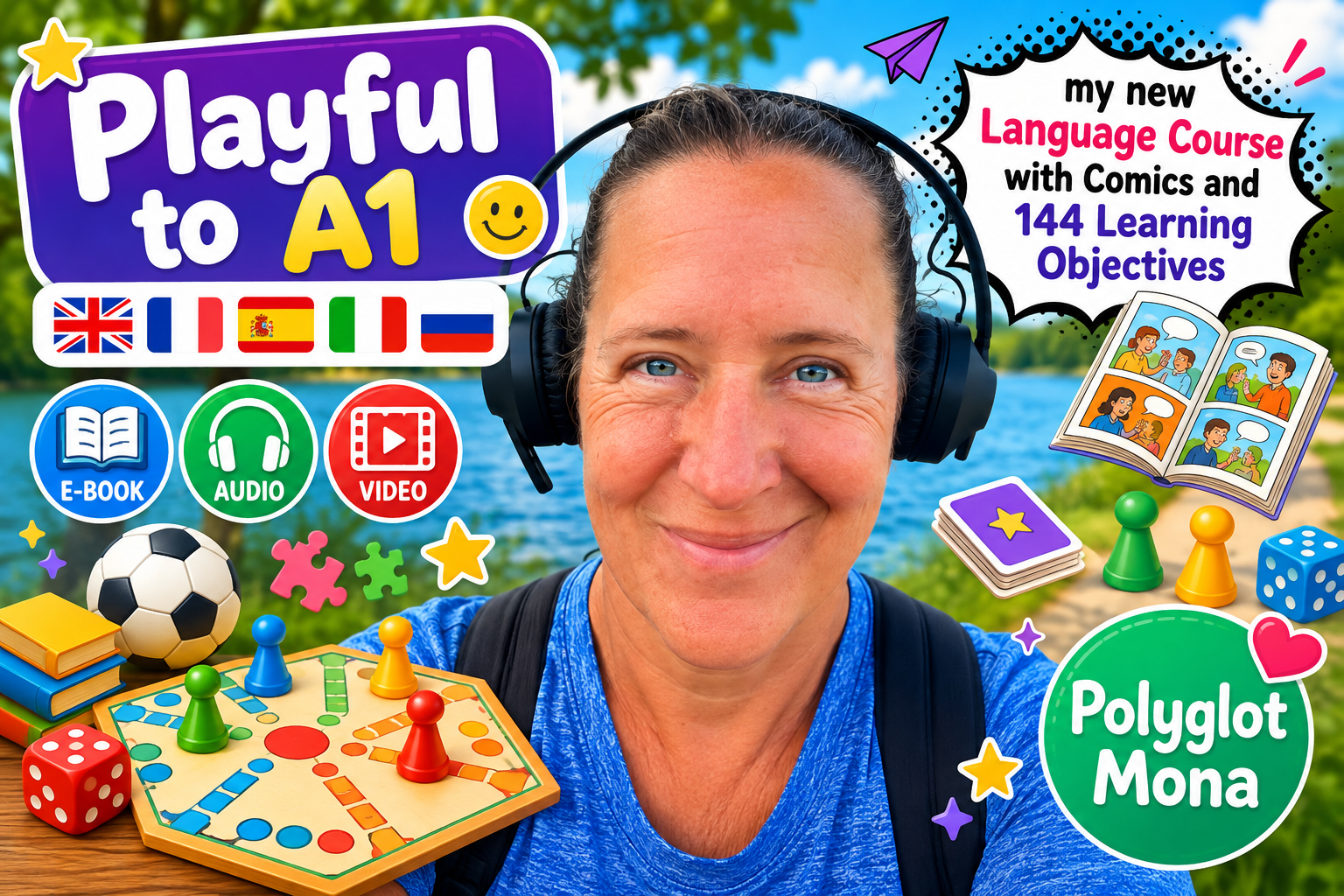
Playful to A1 – My New Language Course with Comics and 144 Learning Objectives
“Playful to A1” is a new language course with 144 learning objectives, comics, lots of pictures, audio recordings and illustrated vocabulary lists. You read the course bilingually, can open both language versions side by side and learn step by step with short dialogues, everyday language and clearly numbered pictures and sentences.
-
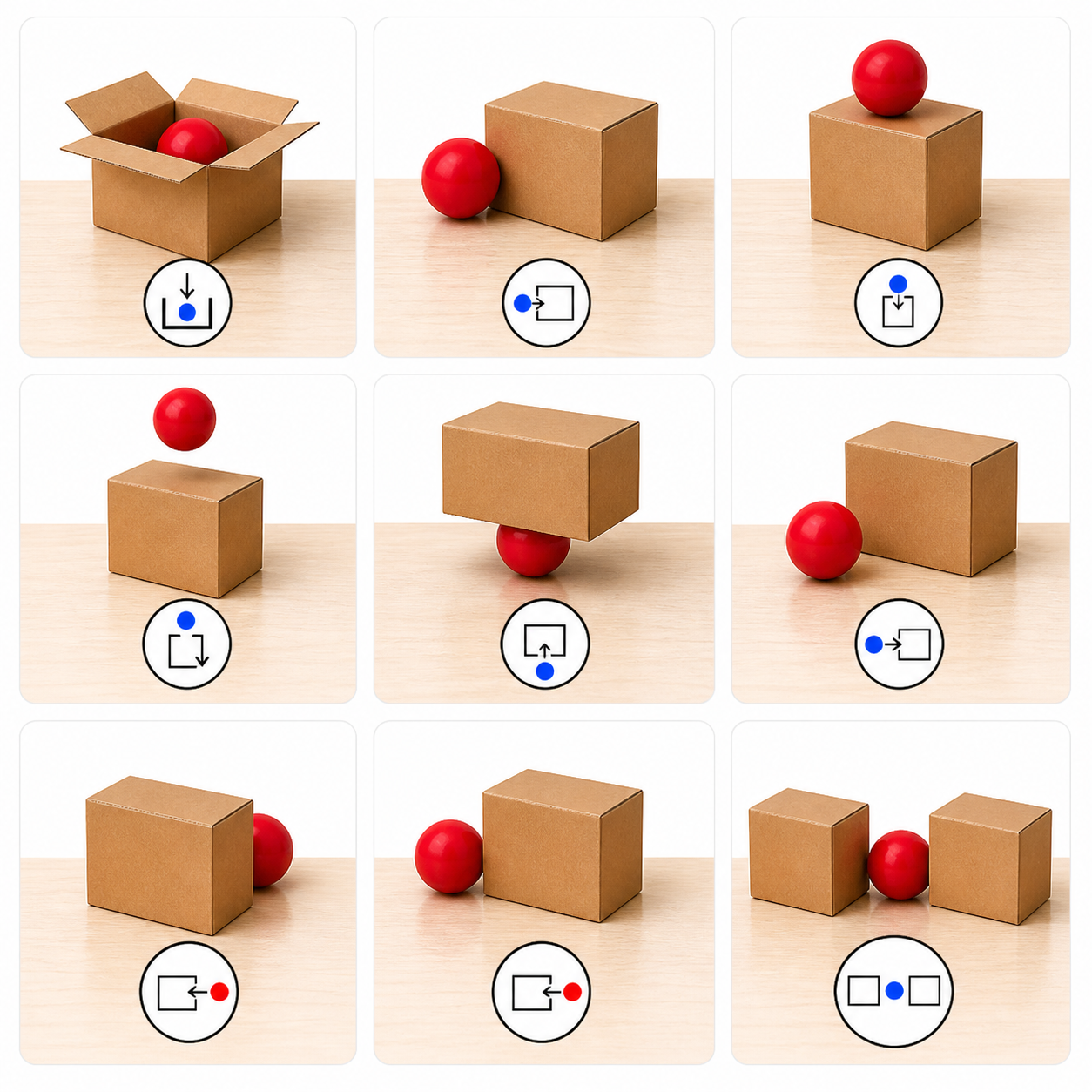
Local Two-Way Prepositions – Describing Direction and Location or Position
Learn German two-way prepositions visually with clear image pairs showing movement (accusative) and location (dative). Simple examples with balls and boxes help you quickly and intuitively understand in, an, auf, über, unter, vor, hinter, neben and zwischen.
-
The 30 Most Important German Verbs – 300 Simple Example Sentences for Beginners (A1–A2)
Learn the 30 most important German verbs with 300 simple A1-level example sentences. Each verb comes with ten short everyday sentences that help you quickly expand your vocabulary and learn common German sentence structures.
-

German Pronunciation for English Speakers
Learn how to pronounce every letter of the German alphabet correctly, as well as the umlauts Ä, Ö and Ü, the letter ß, and all important letter combinations that are pronounced differently from the individual letters. This guide explains German pronunciation for English speakers with clear explanations and practical example sentences.
-

How to Recognize German Nouns More Easily – Common Noun Endings Explained
Common German noun endings such as -ung, -heit, -keit, and -chen make it much easier to recognize nouns. In this article, you will learn the most important noun endings with practical examples and discover how they can help you improve your German more quickly.